News
LATEST NEWS
- 01Ceramic vs stainless steel metering pump
- 02Benefits of ceramic plunger metering pumps
- 03Juchang Ceramic Plunger Metering Pump Valve - Products
- 04What is a ceramic metering pump used for
- 05Ceramic fluid metering pump working principle
- 06Application of Ceramic Liquid Metering Pumps and Drones
- 07Application and Development of Ceramic Valves
- 08Why Ceramic Valves Are Gaining Popularity|Ceramic Material Advantages & Social‑Economic Benefits - Juchang Precision
- 09How Ceramic Valves Came Into Being|Ceramic Valves for Wet‑Flue‑Gas Desulfurization FGD Working Conditions - Juchang Precision
- 010New‑Type Ceramic Valves Enter Market | Wear‑Resistant & Corrosion‑Resistant Industrial Ceramic Valves - Juchang Precision

Address:1st Floor, Zixiang Road, Pingshan District, Shenzhen, Guangdong Province
Zip Code: 518100
Phone: +86 13410681808
E-mail:juchang@zhmidi.com
News
HOMENews
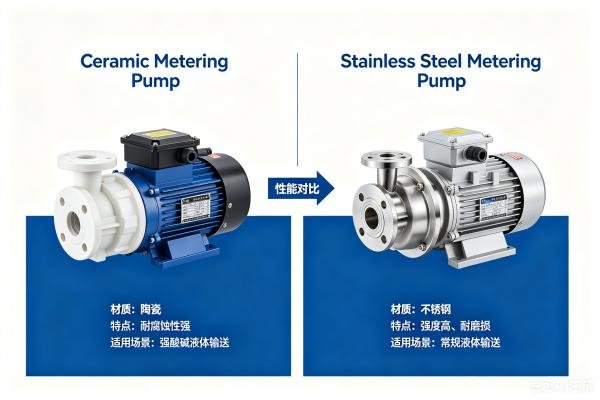
Ceramic vs stainless steel metering pump
2026-05-19 16:06:52 View:312Ceramic and stainless steel metering pumps are both widely used in fluid delivery applications. Choosing the right pump material directly affects accuracy, service life, contamination control and operating costs. This article compares ceramic vs stainless steel metering pumps in detail to help you select the best solution for your working conditions.
Many users experience corrosion, wear, contamination or unstable metering due to incorrect material selection. This comparison covers precision, corrosion resistance, hygiene, wear resistance, maintenance and cost to help you make a confident decision.
Table of Contents
1. Core differences between ceramic and stainless steel metering pumps
Ceramic metering pumps use high-purity zirconia or alumina ceramic for wetted parts. Stainless steel pumps use 304/316L stainless steel components. The material difference creates major performance gaps.
Basic comparison:
• Ceramic: inert, ultra-hard, high-precision, zero contamination
• Stainless steel: conductive, easy to wear, may release metal ions
• Ceramic: ideal for high-purity and corrosive fields
• Stainless steel: suitable for general water and low-corrosion fluids
Material performance determines whether the pump meets industrial requirements for precision, hygiene and durability.
2. Precision and metering stability comparison
Ceramic metering pump
• Accuracy up to ±0.1%
• Ultra-smooth surface for stable flow
• No deformation under temperature changes
• Long-term high precision without drift
Stainless steel metering pump
• Accuracy ±1% or lower
• Wear causes gradual precision decline
• Thermal expansion affects stability
• Regular calibration required
3. Corrosion resistance performance
Ceramic pump
• Resists strong acids, alkalis, solvents and salts
• No rust, no oxidation, no chemical erosion
• Stable in harsh chemical environments
Stainless steel pump
• Corroded by strong acids and halogens
• Rusts and pits in long-term use
• Limited application in corrosive conditions
4. Hygiene and contamination control
Ceramic pump
• Zero metal ion release
• Smooth surface prevents bacteria growth
• Complies with GMP, food and pharmaceutical standards
Stainless steel pump
• May release metal ions
• Rough surface easily adsorbs residues
• Not ideal for ultra-purity applications
5. Wear resistance and service life
Ceramic pump
• Hardness far higher than stainless steel
• Minimal wear in long-term operation
• Service life 3–5 times longer
Stainless steel pump
• High wear rate with abrasive fluids
• Frequent replacement required
• Short service life in harsh conditions
6. Maintenance and operating cost
Ceramic pump → Low wear, less maintenance, lower long-term cost
Stainless steel pump → Frequent repairs, high replacement cost
Ceramic pump → Stable performance, less downtime
Stainless steel pump → Unstable, needs frequent calibration
7. Application scope and suitability
Ceramic pump: pharma, semiconductor, lithium battery, fine chemical, high-purity, corrosive, sanitary fields
Stainless steel pump: general water treatment, low-corrosion fluids, non-hygiene industrial applications
8. Full comparison summary table
| Item | Ceramic Pump | Stainless Steel Pump |
|---|---|---|
| Precision | ±0.1% high precision | ±1% or lower |
| Corrosion Resistance | Excellent | General |
| Contamination | Zero metal ions | Possible metal release |
| Wear Resistance | Ultra-high | Medium |
| Service Life | 3–5 times longer | Short |
| Suitable For | Pharma, battery, semiconductor | General industry |
9. Frequently Asked Questions FAQ
Which is better for corrosive fluids?
Ceramic pump is far better due to inert material and excellent corrosion resistance.
Which pump is more hygienic?
Ceramic pump with zero contamination and smooth surface is more hygienic.
Which pump lasts longer?
Ceramic pump lasts 3–5 times longer than stainless steel pumps.
Which is better for high precision?
Ceramic pump provides much higher and more stable precision.
When to choose stainless steel?
Only for general, low-corrosion, non-hygiene and low-precision applications.
Ceramic metering pumps provide superior performance in precision, corrosion resistance, hygiene and service life. They are the best choice for high-demand industries including pharmaceutical, new energy, semiconductor and fine chemical fluid delivery.
Recommend