News
LATEST NEWS
- 01Ceramic vs stainless steel metering pump
- 02Benefits of ceramic plunger metering pumps
- 03Juchang Ceramic Plunger Metering Pump Valve - Products
- 04What is a ceramic metering pump used for
- 05Ceramic fluid metering pump working principle
- 06Application of Ceramic Liquid Metering Pumps and Drones
- 07Ceramic Valve Maintenance|Practical Points for Extending Ceramic Valve Service Life - Shenzhen Juchang Precision Co., Ltd.
- 08How to Extend Ceramic Valve Service Life|Ceramic Valve Selection & Maintenance Tips
- 09Ceramic Valves: Broad Market Prospects and Recognized Excellent Performance | Juchang Precision
- 010Ceramic Valves Widely Recognized in Soda Ash Industry|Juchang Precision Corrosion-Resistant Ceramic Ball Valves

Address:1st Floor, Zixiang Road, Pingshan District, Shenzhen, Guangdong Province
Zip Code: 518100
Phone: +86 13410681808
E-mail:juchang@zhmidi.com
News
HOMENews
Why choose ceramic for metering pumps
2026-06-03 08:20:16 View:180Ceramic has become the preferred material for high-performance metering pumps in modern industry. Compared with stainless steel, plastic and other materials, ceramic brings significant improvements in precision, corrosion resistance, service life and cleanliness. This article explains the key reasons why ceramic is the best choice for metering pumps.
Many industrial applications such as pharmaceutical, lithium battery, semiconductor and chemical engineering require ultra-high stability and purity. Ceramic metering pumps perfectly meet these strict requirements and solve common problems of metal pumps.
Table of Contents
1. What makes ceramic ideal for metering pumps?
Ceramic is an inert, high-hardness and high-density engineered material specially designed for precision fluid components. It has unique physical and chemical properties that other materials cannot match.
Core advantages of ceramic material:
• Chemically inert and non-reactive
• Extremely high hardness and wear resistance
• Ultra-smooth surface finish
• Zero metal ion precipitation
• Stable performance in harsh environments
These properties make ceramic the best material for high-end precision metering pumps.
2. Ultra-high precision and stability
Precision performance
• Machining precision up to micron level
• Low thermal expansion rate, no deformation
• Stable flow output without drift
• Accuracy can reach ±0.1%
• Perfect for micro-precision dosing
3. Excellent corrosion resistance
Ceramic is completely inert to most chemicals and will not corrode or dissolve.
Chemical resistance
• Resists strong acids, alkalis and organic solvents
• No rust, no oxidation, no erosion
• Long-term stable in corrosive media
• Far better than stainless steel and plastics
4. Zero metal contamination
Ceramic contains no metal ions and will not pollute fluids during delivery.
Clean and hygienic
• Zero metal ion release
• Smooth surface, no residue or bacteria
• Meets GMP, food and semiconductor standards
• Ideal for high-purity and sanitary applications
5. Extreme wear resistance
Ceramic hardness is much higher than metal, with extremely low wear rate.
Durability
• Service life 3–5 times longer than metal parts
• Stable performance with abrasive fluids
• No dimensional changes after long-term use
• Reduces maintenance and replacement costs
6. High sealing and no leakage
Ultra-smooth surface → Improves sealing effect and reduces friction
High matching precision → No internal backflow
Stable structure → No external leakage
Safe operation → Protects operators and production environment
7. Wide application adaptability
• Pharmaceutical & laboratory: high hygiene, GMP compliance
• Lithium battery: high precision, zero contamination
• Semiconductor: ultra-clean, no metal ions
• Chemical industry: corrosion resistance, long life
• Food & beverage: sanitary, easy to clean
• Water treatment: stable, durable and low cost
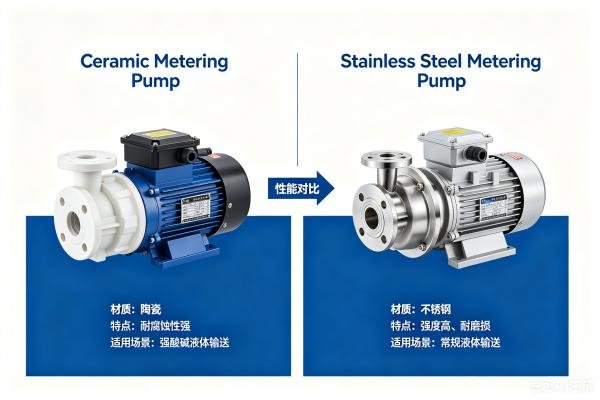
8. Ceramic vs other materials summary
| Item | Ceramic | Stainless Steel |
|---|---|---|
| Precision | Ultra-high ±0.1% | General ±1% |
| Corrosion Resistance | Excellent | Medium |
| Contamination | Zero | Possible |
| Wear Resistance | Extreme | Medium |
| Service Life | Extra long | Short |
9. Frequently Asked Questions FAQ
Why is ceramic better for metering pumps?
Ceramic offers higher precision, better corrosion resistance, zero contamination and longer service life.
Is ceramic suitable for corrosive liquids?
Yes, ceramic is inert and ideal for acids, alkalis, solvents and chemicals.
Can ceramic pumps be used in pharma and food?
Yes, they are zero-contamination and meet sanitary and GMP standards.
How long do ceramic metering pumps last?
3 to 5 times longer than stainless steel pumps with very low wear.
Does ceramic affect fluid purity?
No, ceramic releases no ions and keeps fluids 100% pure.
Ceramic is undoubtedly the best material for high-performance metering pumps. It greatly improves precision, durability and safety while reducing long-term operating costs, making it the first choice for high-end industrial fluid applications.
Recommend