Products
LATEST NEWS
- 01Application of ceramic plunger pump
- 02The structure and principle of ceramic pumps
- 03Alumina ceramic properties
- 04Ceramic metering pump manufacturer
- 05Chinese ceramic pump manufacturer
- 06Troubleshooting pneumatic valve actuators
- 07Analysis of Speed Control Valve Faults in Hydraulic Station Hydraulic Systems
- 08What are the requirements and methods for pressure testing of imported valves?
- 09How to correctly choose a suitable imported valve
- 010Precautions for the Installation and Maintenance of Safety Valves

Address:1st Floor, Zixiang Road, Pingshan District, Shenzhen, Guangdong Province
Zip Code: 518100
Phone: +86 13410681808
E-mail:juchang@ceramic-pumps.com
Ceramic plunger pump
HOMECeramic plunger pump
Ceramic plunger pump
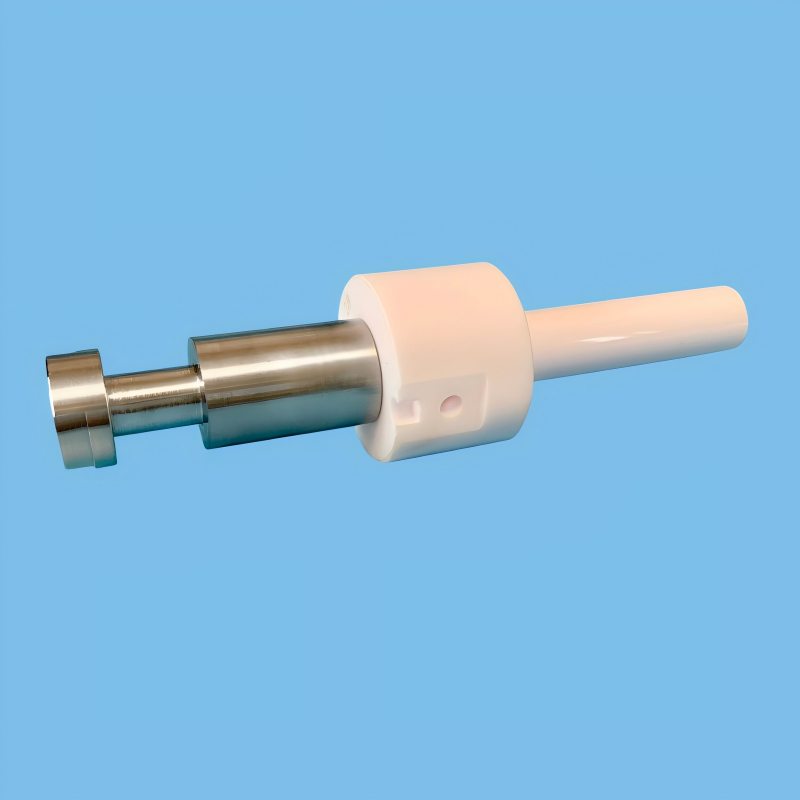
The ceramic plunger pump is a high-pressure pump that uses the reciprocating motion of the ceramic plunger to achieve liquid delivery. It has the of corrosion resistance, wear resistance, and long service life. It is widely used in chemical, pharmaceutical, food, and other industries. Its working principle is to drive the plunger reciprocate in the pump cavity through the motor, forming a negative pressure to suck in liquid, and then discharging the liquid under high pressure. The working pressure can reach above100MPa.
Application scenarios
Chemical industry: Transportation of corrosive liquids (acids, alkalis, etc.)
Pharmaceutical industry: Transportation of high-purity liquids.
Food industry: Transportation of liquids with high sanitary requirements.
Maintenance points
ularly check the wear of seals and plungers.
Ensure the pump is firmly installed to avoid vibration affecting performance.
To determine whether the ceramic plunger pump needs, it is necessary to consider the following key indicators:
1. Abnormal performance signals
Decreased efficiency: Flow or pressure significantly lower than rated values, which be caused by plunger wear or seal failure.
Abnormal noise/vibration: Indicating wear or looseness of internal components (such as valve groups bearings).
Excessive temperature rise: Continuous temperature rise at friction points, which may be caused by poor lubrication or abnormal assembly clearance.
2. status inspection
Plunger and seal:
Check whether there are scratches, corrosion, or deformation on the plunger surface.
Seal integrity test: Plug the oil hole and pull out the plunger, if there is no suction or slow retraction, it needs to be replaced.
Wear characteristics:
The plunger shows milk-white grooves, comb-like fine lines at the beam, or wear at the sleeve oil inlet hole.
The seal ring should be tightened without leakage, too tight will accelerate wear.
3. Regular maintenance cycle
500 hours: Replace hydraulic oil, clean the filter, and check seals.
100 hours: Check connecting rod bolts, assembly clearance, and packing wear.
5000 hours: Regular overhaul, and a major overhaul is required at 0000 hours.
4. Medium and environmental impact
Corrosive medium: It is necessary to confirm the ceramic corrosion resistance grade to avoid surface corrosion pits
Particle content: High hardness particles can scratch the plunger and require additional filters.
Temperature fluctuation: Avoid sudden cooling and heating to prevent ceramic cracking
If any of the above anomalies occur, stop the machine for timely maintenance or replacement of parts.