News
LATEST NEWS
- 01Application of ceramic plunger pump
- 02The structure and principle of ceramic pumps
- 03Alumina ceramic properties
- 04Ceramic metering pump manufacturer
- 05Chinese ceramic pump manufacturer
- 06Troubleshooting pneumatic valve actuators
- 07Analysis of Speed Control Valve Faults in Hydraulic Station Hydraulic Systems
- 08What are the requirements and methods for pressure testing of imported valves?
- 09How to correctly choose a suitable imported valve
- 010Precautions for the Installation and Maintenance of Safety Valves

Address:1st Floor, Zixiang Road, Pingshan District, Shenzhen, Guangdong Province
Zip Code: 518100
Phone: +86 13410681808
E-mail:juchang@ceramic-pumps.com
News
HOMENews
Hydraulic ceramic piston pump
2025-12-24 09:14:37 View:309The working principle of the hydraulic ceramic plunger pump is actually quite intuitive. The core is to change the volume of the sealed cavity the reciprocating motion of the plunger to achieve oil suction and pressure. Let me break down its working process for you:
1. Core Working Principle
Oil suction process: The plunger moves outward under the action of the driving mechanism (such as a swash plate or crankshaft), the volume of sealed cavity gradually increases, forming a local vacuum, and hydraulic oil is sucked in under the action of atmospheric pressure.
Oil pressure process: The plunger retract into the cylinder, the volume of the sealed cavity decreases, the oil is squeezed and the pressure increases, and when the pressure exceeds the system pressure, the high-pressure oil is out.
2. Continuous Working Mechanism
Multi-plunger design: Typically, multiple plungers (such as 7, 9, or 1) are configured, evenly distributed around the circle, and driven by a swash plate or cam, to achieve continuous oil suction and pressure.
Flow regulation: adjusting the angle of the swash plate, the stroke of the plunger can be changed, thereby controlling the flow rate.
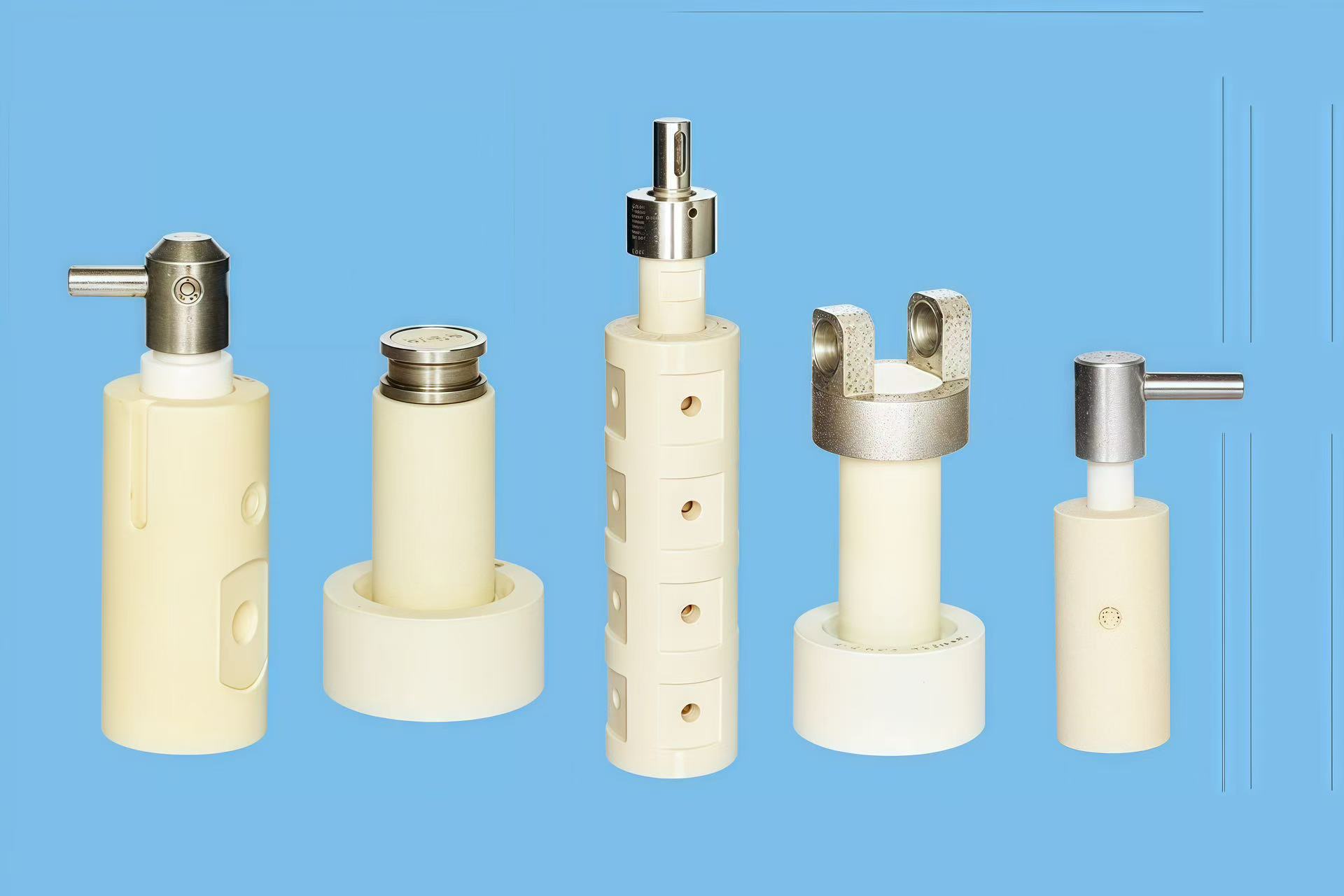
3. Advantages of Ceramic PlungersWear and corrosion resistance: Ceramic plungers (such as zirconia) have high hardness and strong compressive strength, suitable for conveying corrosive (such as acid and alkali) or slurry containing particles.
Long life: Ceramic materials have excellent wear resistance and low maintenance costs, suitable for high pressure large flow, and continuous working environments.
4. Typical Applications
Industrial field: Petrochemical industry, automobile manufacturing, machinery manufacturing, industrial automation, etc
Environmental protection field: Industrial sewage treatment, slurry transportation, etc.
If you have specific use scenarios or parameter requirements, I can help you analyze in.
Recommend